Case challenge
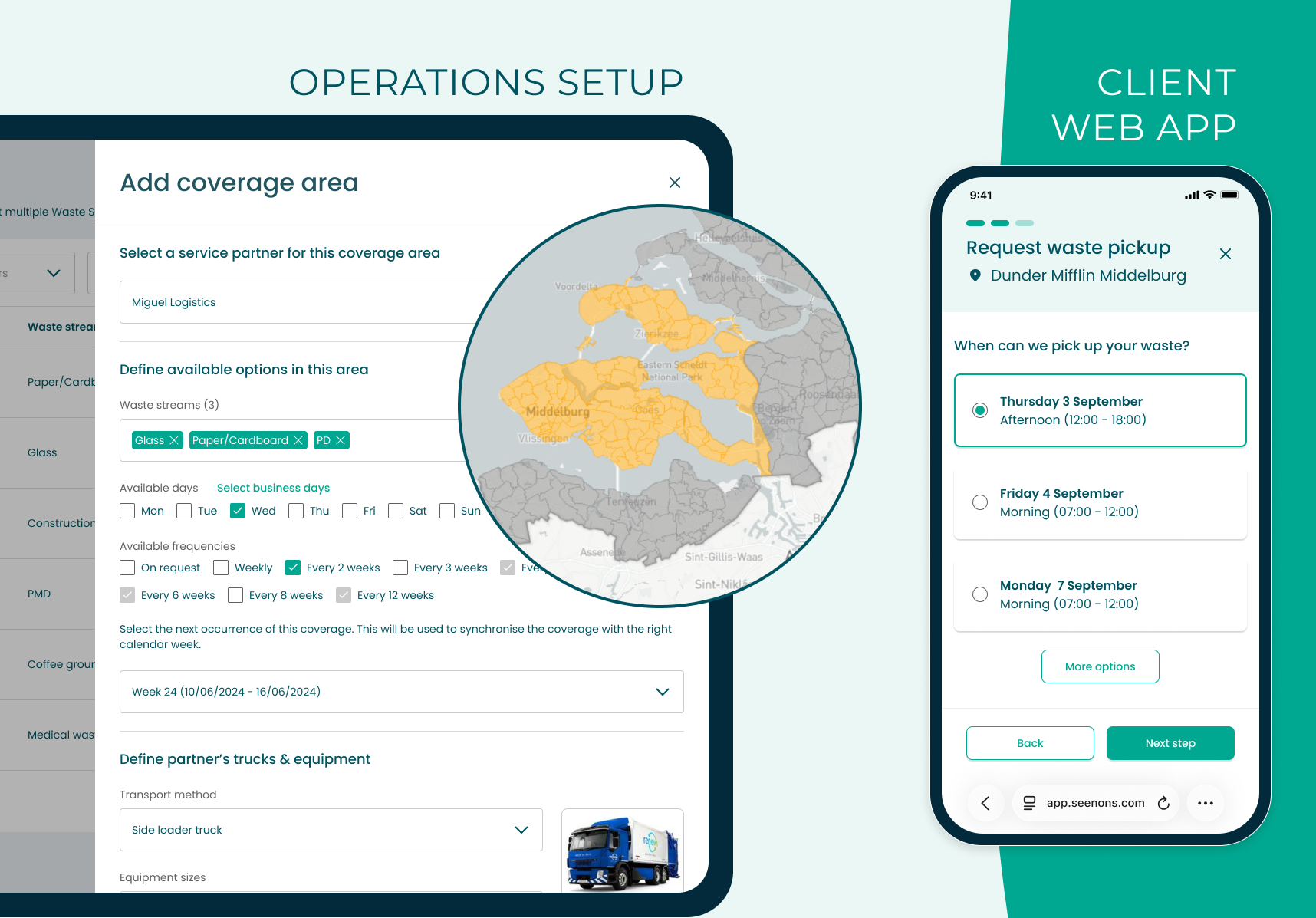
Seenons connects businesses with 300+ waste collection partners, making sure every waste stream is reused or recycled in the best possible way. To match clients with the right partner and available collection dates, the platform relied on up-to-date route data, manually maintained by the operations team. It had worked at small scale, but as Seenons grew, we needed to find a way for it to work at scale too.
Project overview
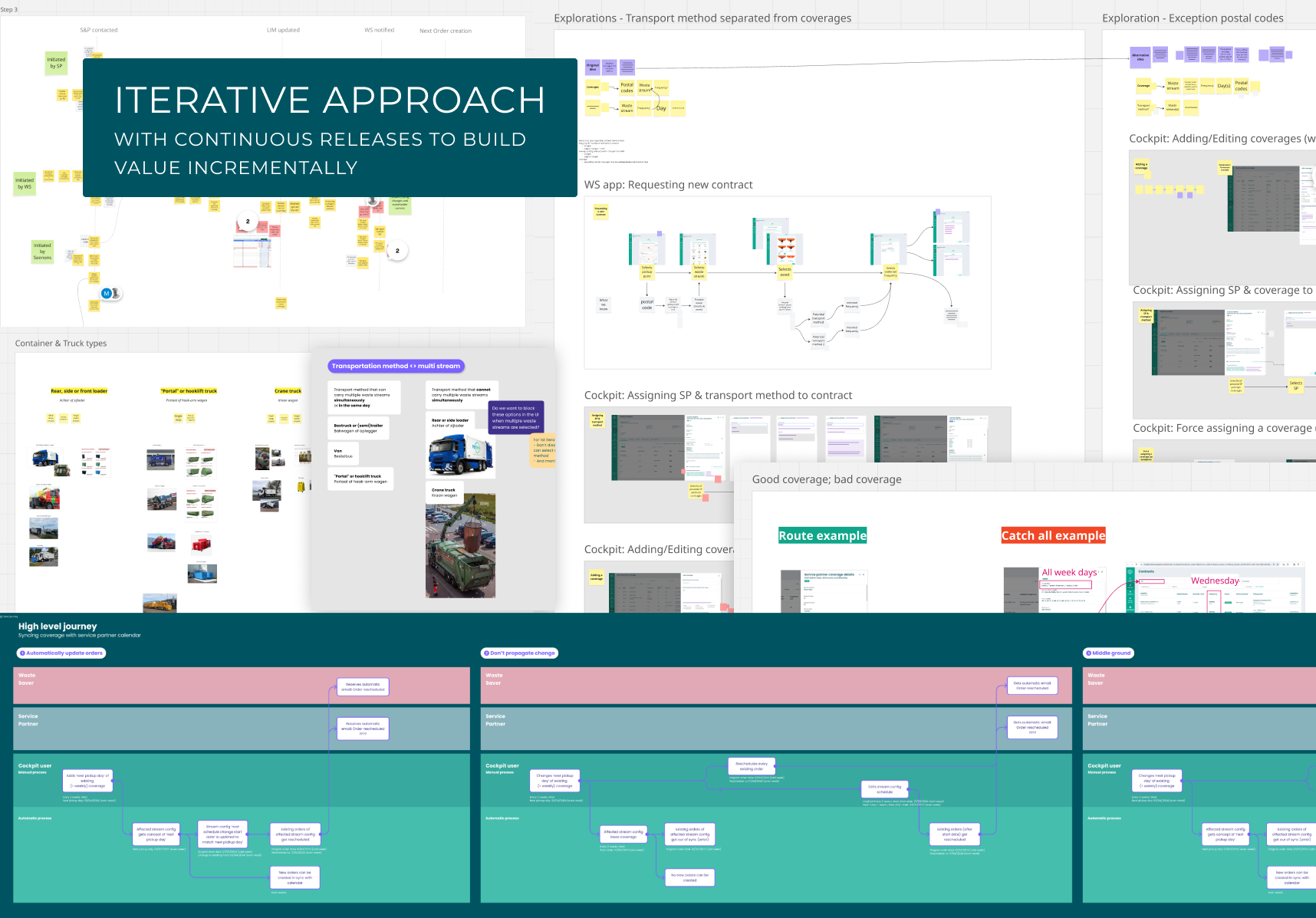
Over the course of six months, I worked as the lead and sole designer alongside a product manager and two developers on what turned out to be one of the more iterative projects of my time at Seenons.
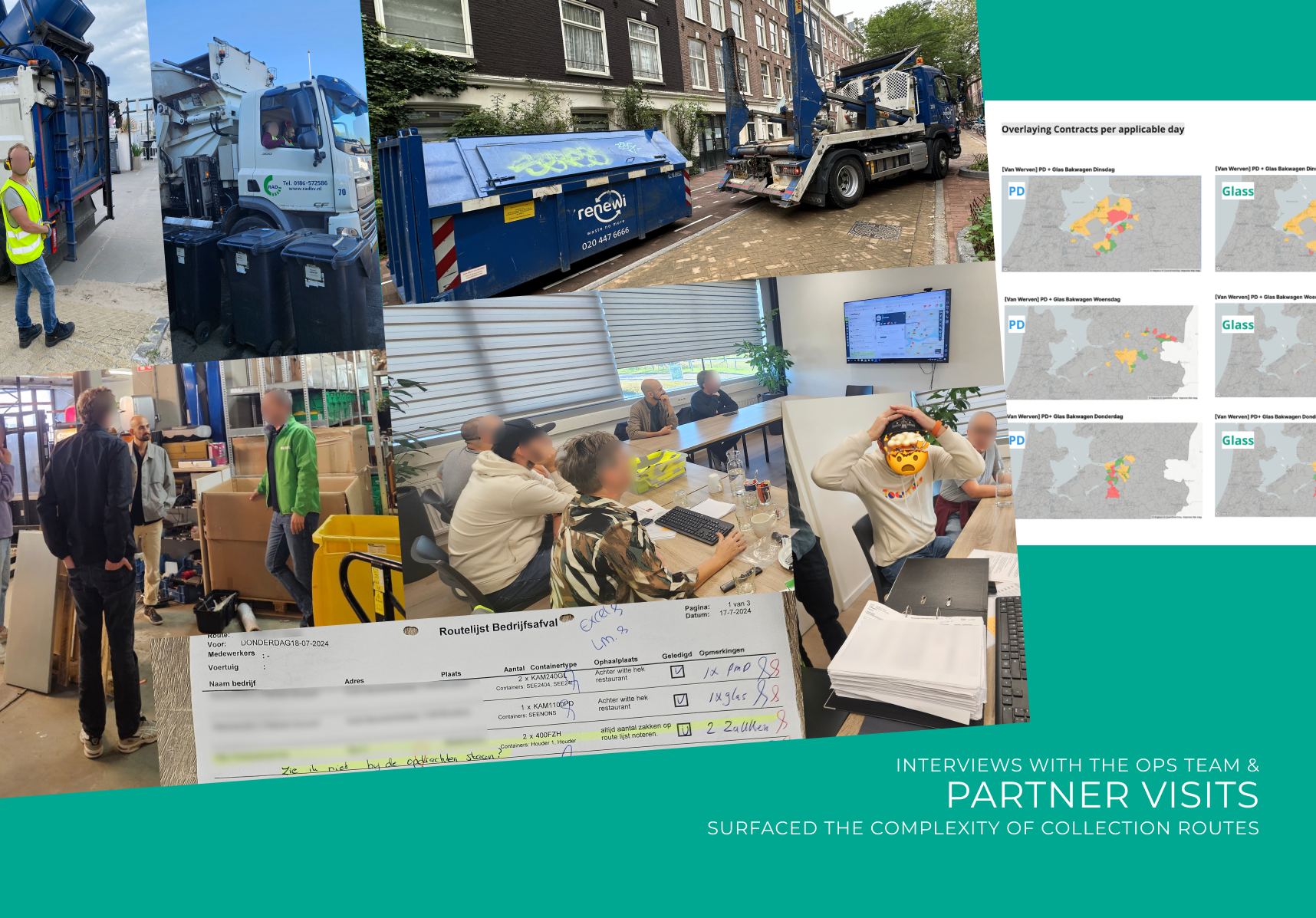
The first direction to reduce the manual bottleneck was clear: build a tool for our operations team to more easily register and maintain partner collection routes, and eventually hand that responsibility to the partners themselves. But including the in the process (with site visits, riding along with truck drivers & leading co-creation sessions with them) revealed that routes were far more flexible and unpredictable than we had assumed. Partners didn't have the incentive to keep detailed route data up to date for us, and asking them to maintain a new tool on top of their existing processes was too much to ask.
That led to a harder question: did customers actually need to select a specific collection date and time upfront? Research with the location managers at the customer side gave us the answer. They didn't need a precise date, instead they needed confidence that their waste would be collected, and to be informed when. That insight flipped the whole solution: we allowed customers to request a collection based on their preferred frequency, the partners would then select the actual date on their end, and everyone was notified automatically. No routes to maintain, no support team in the middle.
A simple solution, but it meant rethinking something more fundamental than the feature itself: our promise to customers and a model that had worked until then.