Project overview
This project started as my graduation project — a six month research and design project, graded 9.5 — and continued when NightBalance hired me to implement the resulted strategy.
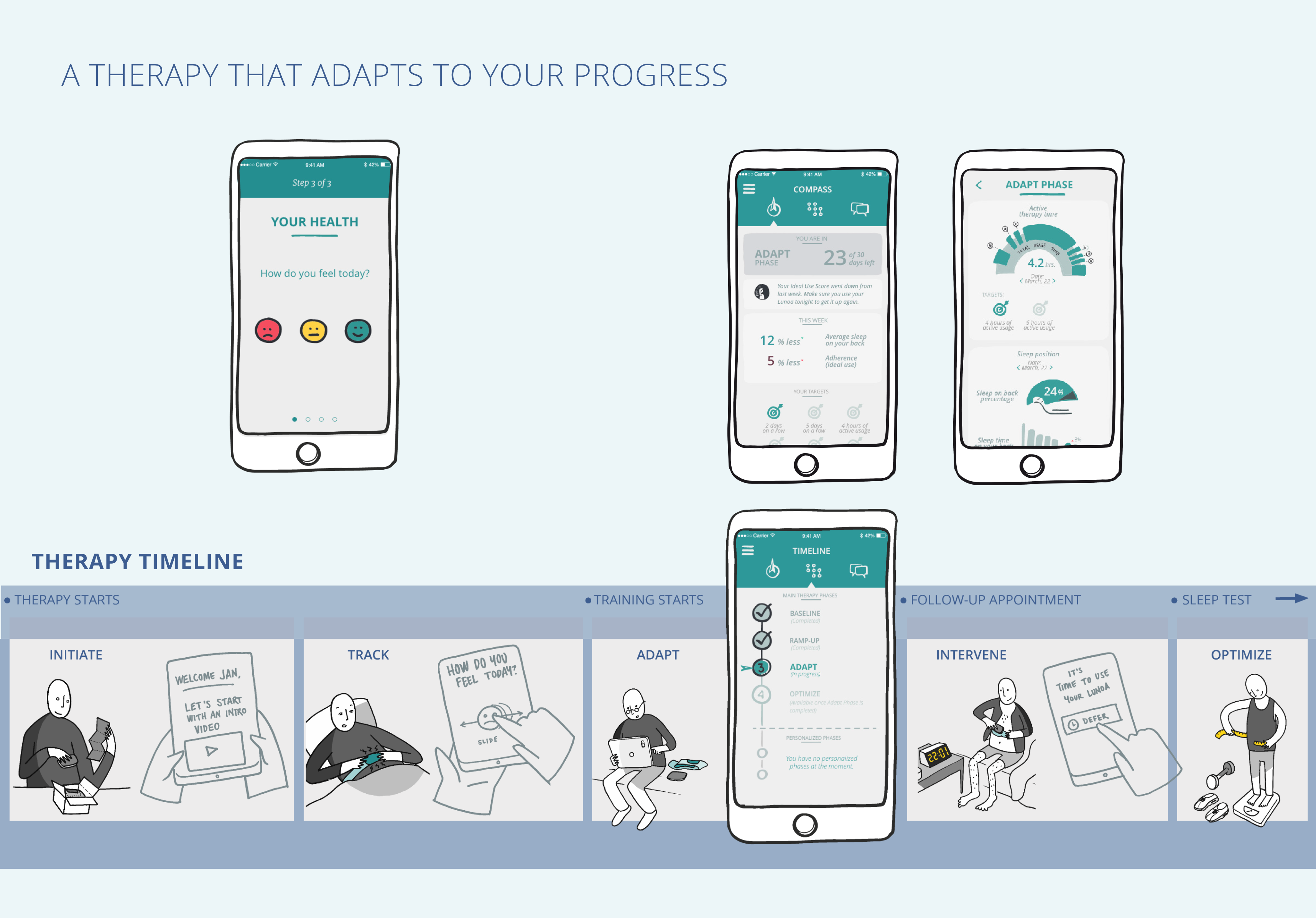
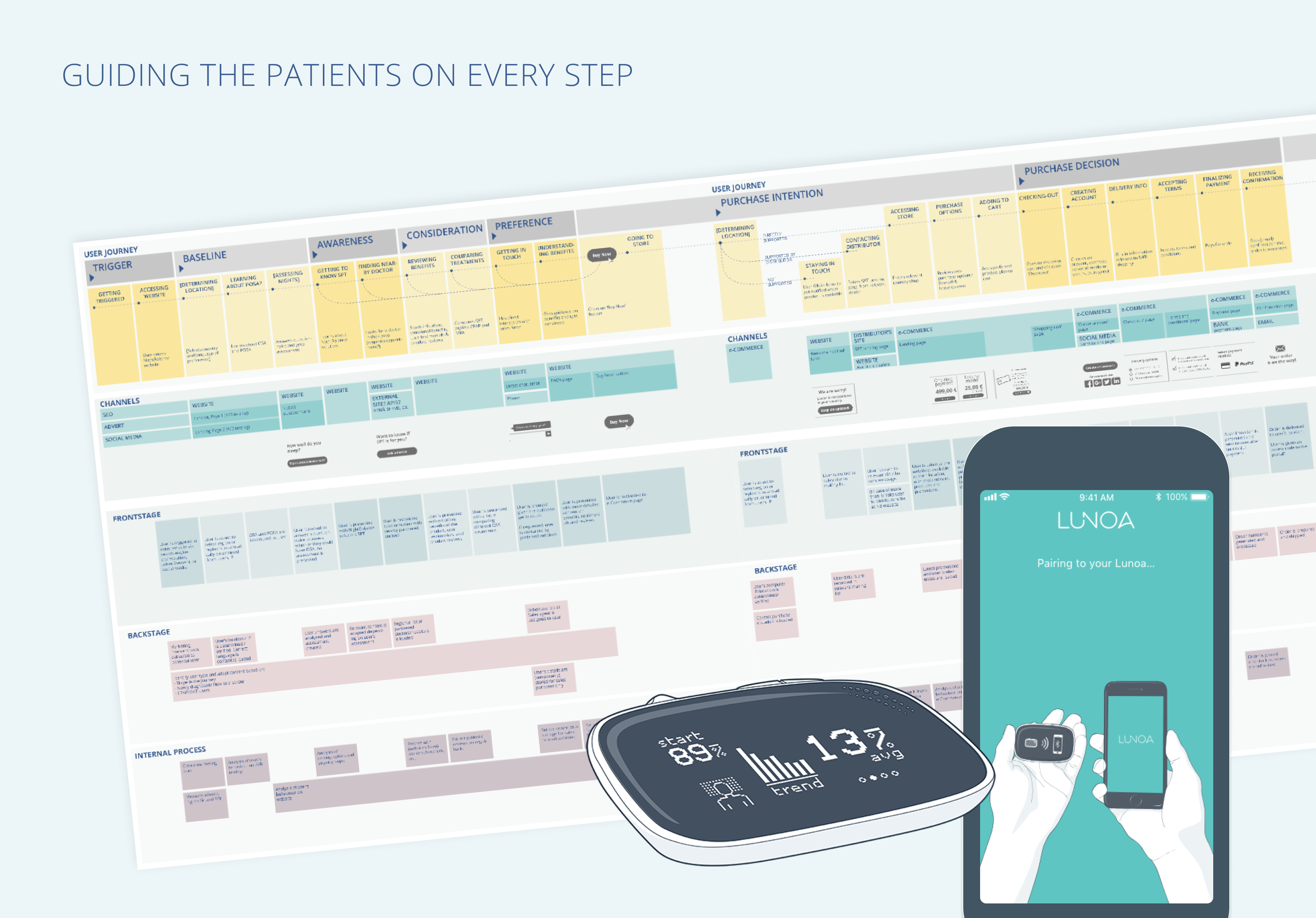
Through exploratory research with patients and healthcare professionals, I mapped where patients were dropping off in their therapy and why. That identified a core opportunity: rather than a single long therapy, what if the experience was broken multiple shorter phases, each with specific goals, adapting to where the patient actually was in their journey?
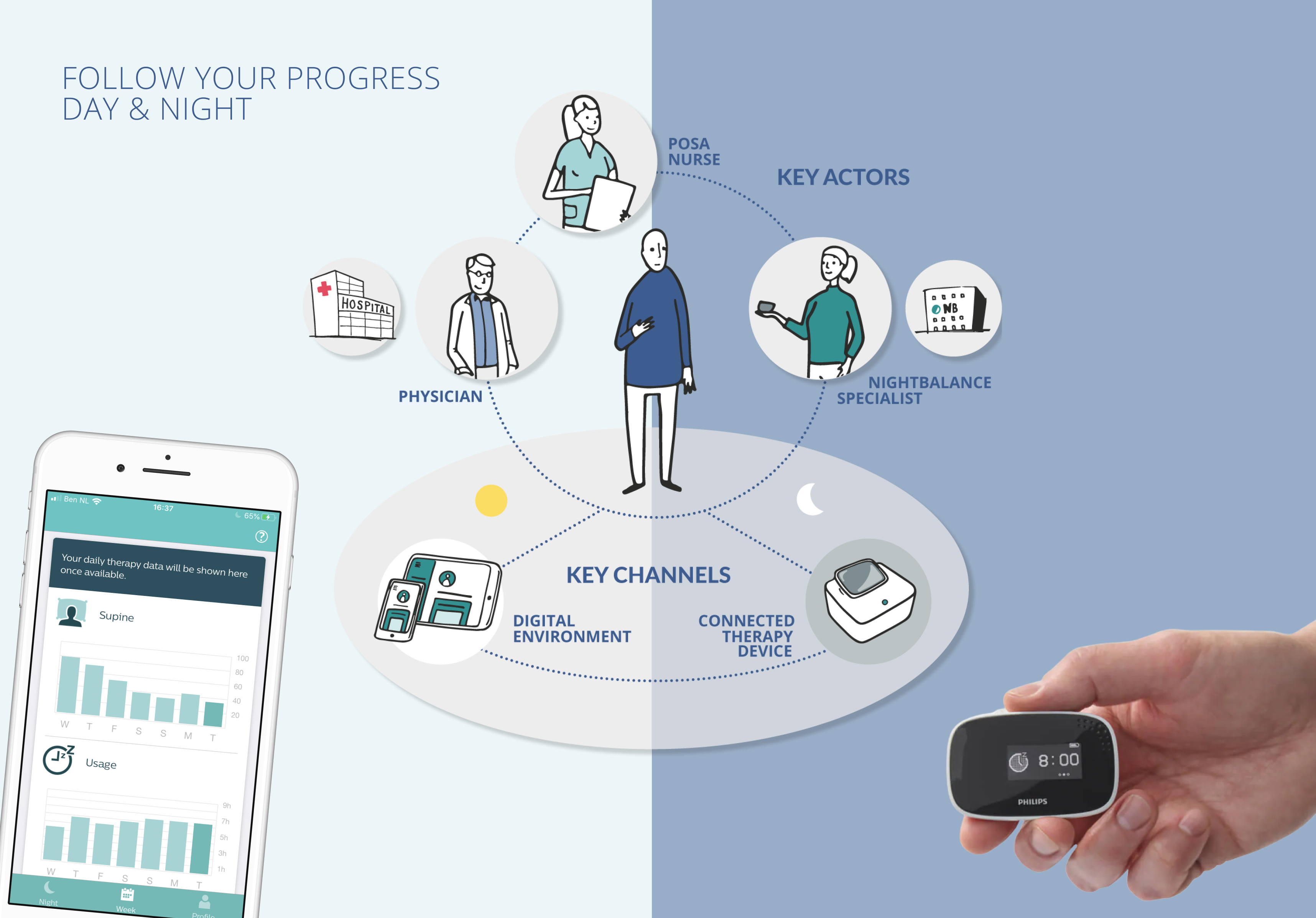
The solution connected NightBalance's Sleep Position Trainer device with a digital environment that learn from patients and keep them engaged over time. Beyond the strategy, I also designed the patient app and contributed to research and documentation required for medical certification.
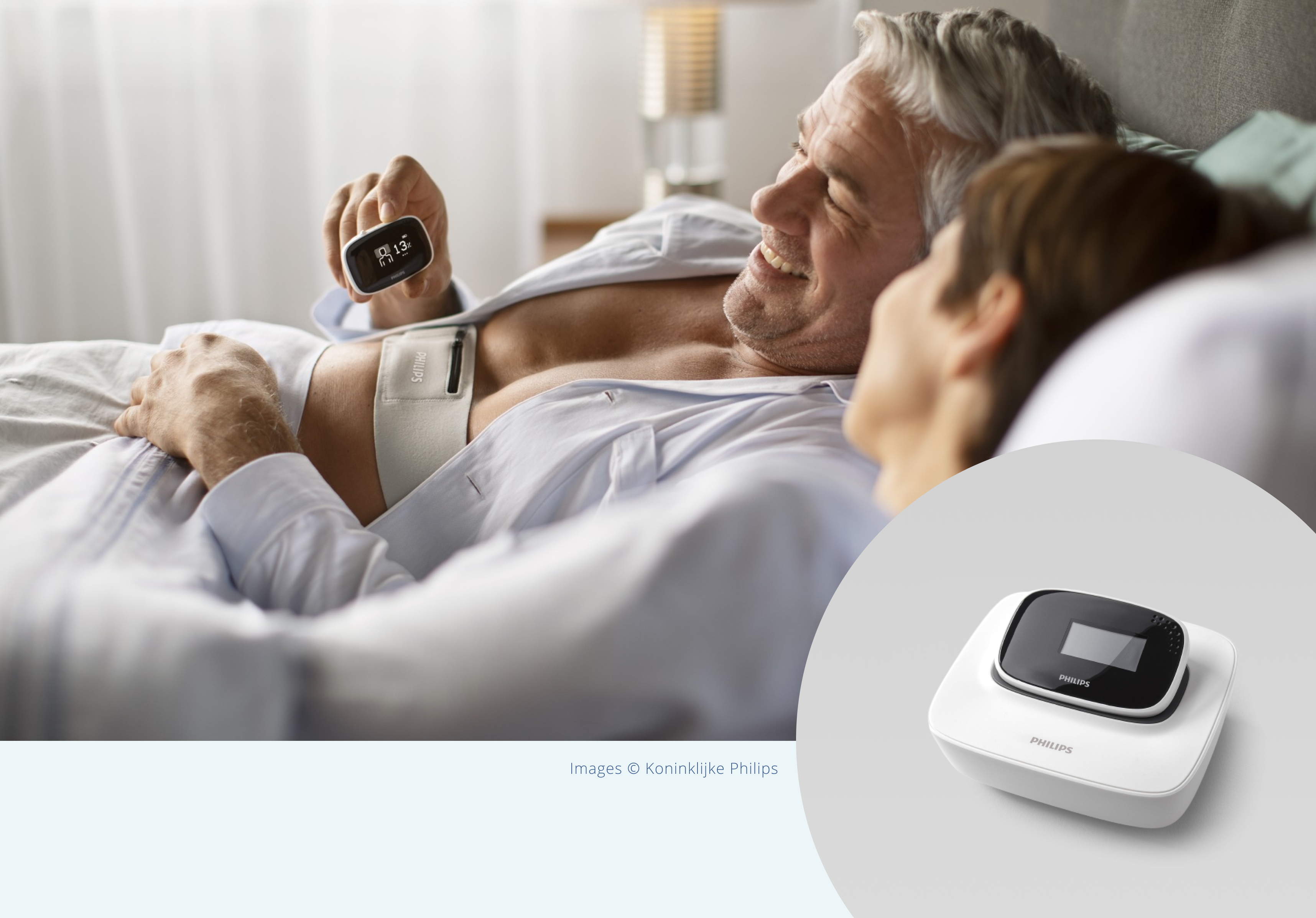
Shortly after, NightBalance was acquired by Philips. Their device is now marketed as Philips NightBalance.